.svg)
Share
Copied!
%201.svg) Customer Story
Customer Story


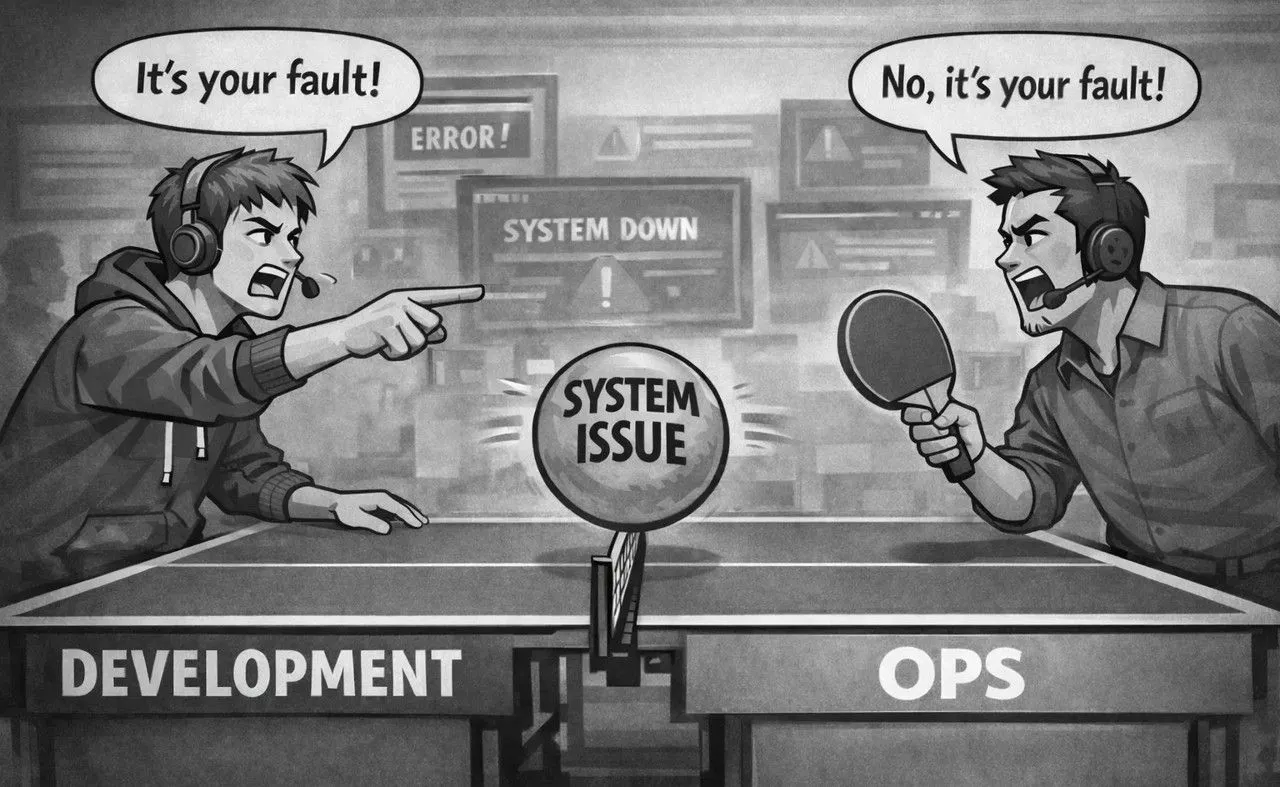
“The network is fine. Isn’t it an application issue?”
“The code is working perfectly. Could it be a database lock?”
The so-called “ping-pong game” of shifting responsibility in IT operations isn’t simply about avoiding accountability. It often arises when teams interpret fragmented data through different monitoring tools—a structural inefficiency caused by a lack of end-to-end visibility across the entire system.
In today’s complex hybrid environments, where cloud and on-premise infrastructure coexist, AXA General Insurance Korea faced similar operational challenges: invisible monitoring blind spots and declining trust between teams caused by inconsistent and incomplete data.
Today, however, AXA’s IT operations look very different. Assumptions have been replaced by clear, data-driven insights. The infrastructure team, development team, and even executive leadership now rely on a unified “One-View” dashboard to proactively identify and resolve issues.
How did AXA turn uncertainty into confidence and transform its IT organization into a core driver of business innovation? We spoke with Sang-hoo Park, IT Chief Architect, who led this transformation, to hear how AXA built a data-driven operational model with WhaTap.

Hello. I am Sang-hoo Park, serving as the IT Chief Architect (CA) at AXA General Insurance Korea. I oversee enterprise-wide IT planning and execution, manage technical coordination with AXA Group headquarters, and define and govern our overall IT architecture standards.
AXA General Insurance is the Korean subsidiary of AXA, a global insurance and asset management group headquartered in Paris. We pioneered Korea’s direct auto insurance market and continue to provide comprehensive financial services, including auto, long-term, and general insurance.
Today, with approximately 1,500 employees and a nationwide network, we aim to go beyond traditional insurance services and become a trusted partner that supports our customers throughout their lives.

Before adopting WhaTap, we relied on a combination of foreign monitoring solutions and several domestic APM tools. However, we continuously encountered two core issues: monitoring blind spots and low data reliability.
First, there were “black box” environments where agents could not be installed due to legacy systems or restricted internal environments. As a result, when incidents occurred, identifying the root cause was often impossible, creating significant constraints on our operations.
Second, the reliability of monitoring data was frequently questioned. Because existing tools were primarily used by the infrastructure team, development teams often struggled to trust the metrics. We repeatedly encountered situations where monitoring tools indicated that everything was operating normally, while actual service performance was noticeably degraded.
This lack of visibility went beyond operational inconvenience and began to erode trust across the organization. As the time required to identify root causes increased and MTTR rose, recurring cycles of responsibility shifting between development and operations became more pronounced.
This not only increased fatigue within IT teams but also reduced confidence among business departments such as sales and claims. Ultimately, it posed risks to service stability and, in the long term, to customer experience and brand reputation.
Yes. While addressing these operational challenges, we were also advancing a next-generation system initiative. During that process, a partner introduced WhaTap.
What immediately stood out was its ability to manage hybrid environments—where cloud and on-premise infrastructure coexist—within a single integrated platform. That capability led us to seriously evaluate its potential.
Using our next-generation system initiative as a catalyst, we selected WhaTap as our enterprise-standard monitoring platform and focused on two core strategies: integration and correlation.
First, we addressed monitoring blind spots by building a full-stack monitoring environment covering our entire hybrid infrastructure. This included not only newly developed applications but also legacy systems. We expanded our monitoring scope from the application layer to servers, databases, and end-user experience through browser monitoring. By detecting client-side errors in real time through RUM—something that had previously been difficult to track—we achieved seamless end-to-end visibility from infrastructure to the end-user experience.
Second, we restored data credibility and established collaboration standards through our “One-View” strategy. The most significant change was that the infrastructure team, development team, and executive leadership began communicating based on the same data and the same dashboard.
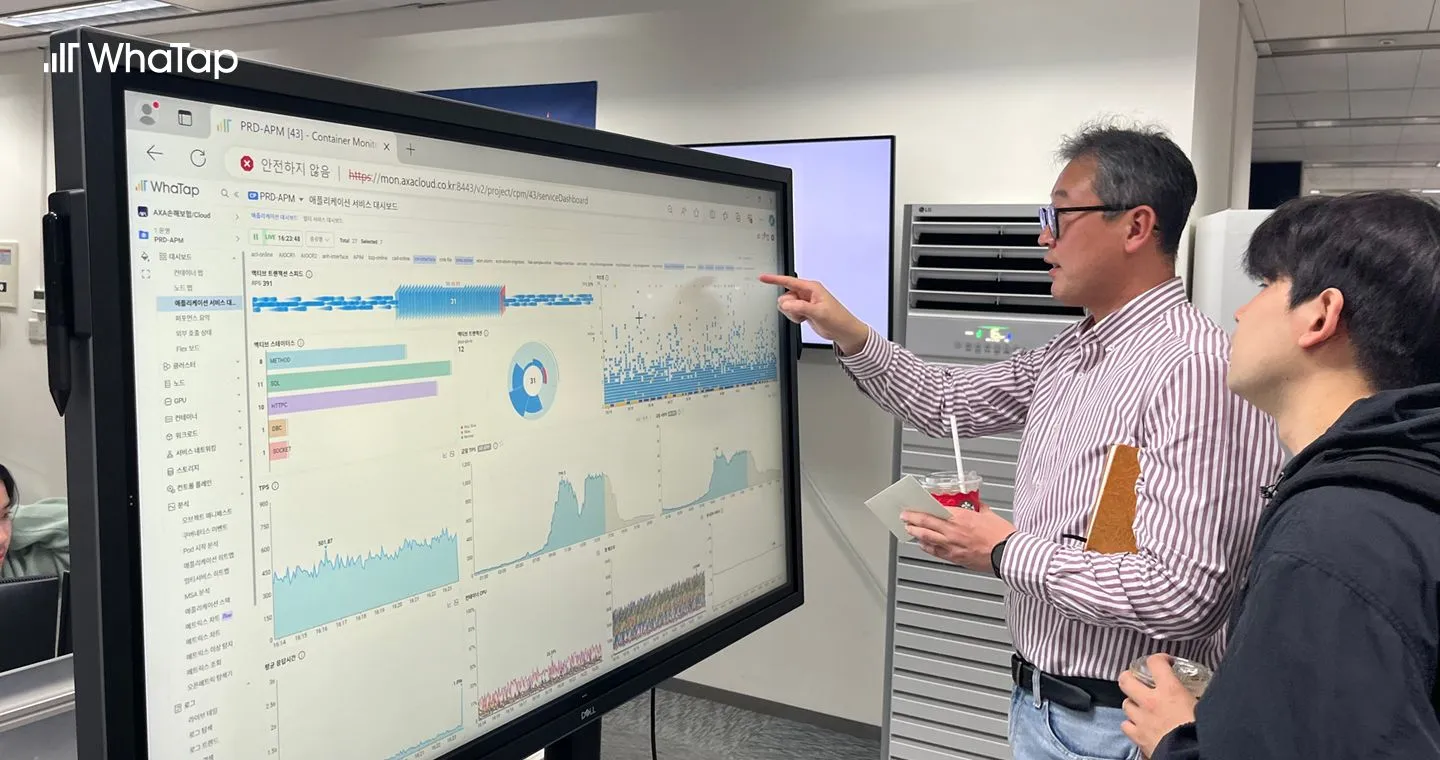
In the past, teams relied on different tools and metrics, often leading to fragmented interpretations and blame shifting. Now, we use hitmaps to intuitively identify abnormal patterns and trace problematic transactions down to SQL bind variables or session logs with a single click.
.gif)
By correlating RUM-detected errors with server-side logs, we eliminated the recurring disconnect in which systems appeared normal while users experienced performance issues. This established a clear, data-driven decision-making process.
Without hesitation, I would say unified visibility. WhaTap consolidates infrastructure, applications, databases, and user experience into a single intuitive SaaS platform, significantly improving operational efficiency and clarity.
The most significant outcome has been the transition to a data-driven operational culture. Previously, it was difficult to manage incidents quantitatively, but we have now significantly reduced MTTR and can manage previously invisible issues using clear, objective metrics.
Our organizational culture has also evolved. Instead of discussions based on assumptions, teams now resolve issues using objective data from the WhaTap dashboard. It has become standard practice for relevant teams to review the same dashboard together during major deployments or critical events, significantly improving communication and collaboration.
Improved system stability has directly enhanced customer experience. We have reduced the risk of customer dissatisfaction or churn caused by service disruptions. Internally, the IT organization has shifted away from reactive firefighting and repositioned itself as a strategic partner that supports business innovation and growth.
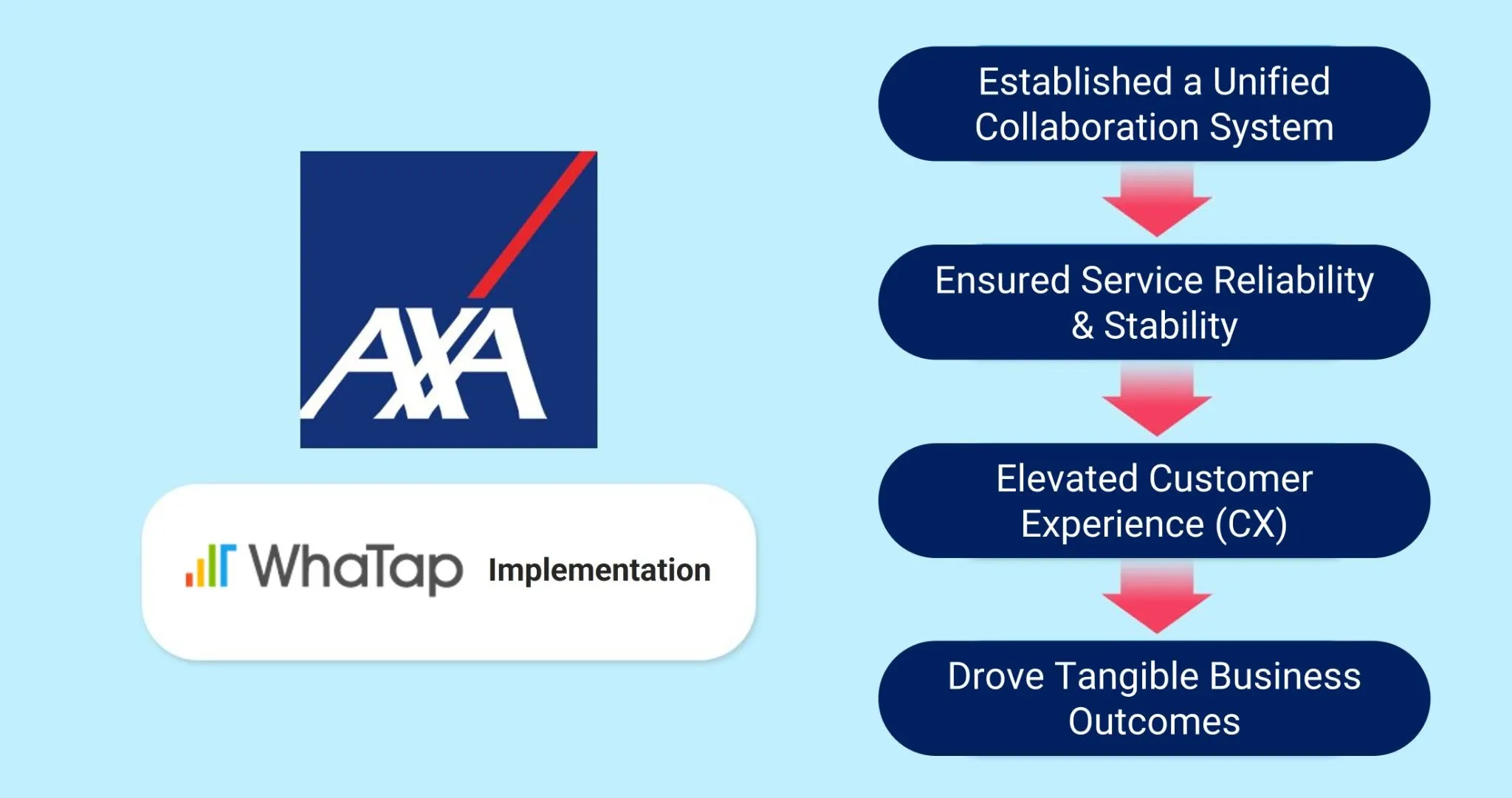
Our primary goal is to move beyond post-incident analysis and build predictive failure models based on the extensive operational data accumulated in WhaTap, while also enhancing real-time alerting capabilities. Ultimately, we aim to establish an AIOps environment in which potential issues can be detected early and addressed proactively.

Through the adoption of WhaTap, AXA General Insurance Korea has successfully transitioned to a data-driven operational model while eliminating monitoring blind spots and restoring data reliability. A collaborative structure is now firmly in place, where development, infrastructure, and management teams operate based on the same unified view, resulting in measurable improvements such as reduced MTTR and enhanced service stability.
WhaTap has established itself as a core operational platform that integrally manages AXA’s complex hybrid environment and provides a strong foundation for enterprise-wide operational efficiency and improved customer experience.
As AXA continues its transition from reactive response to proactive and predictive operations, WhaTap will remain a strategic partner supporting both service stability and long-term operational innovation.

%201.svg)