.svg)
Share
Copied!



When buying a car for the first time, many people consider a used car as an option. However, unlike purchasing a new car, buying a used car requires at least six steps before it fully becomes your own vehicle. In addition, the used-car market suffers from severe information asymmetry due to false listings, dealer-driven price gaps, and complicated processes such as loans and ownership transfers. As a result, consumers often feel that the barriers to entry are significantly higher.
To simplify this complexity, CARMERCE, a newly launched used-car e-commerce platform, aims to make the entire transaction process as easy as buying everyday items online. With a three-step verification system, CARMERCE allows users to complete the full purchase workflow—from vehicle registration and payment to loans, ownership transfer, and registration—entirely online.
During the early stages of launching the service, the team needed to resolve errors quickly and ensure stable operations. This required everything from basic monitoring to development of new features. According to the CARMERCE development team, WhaTap Monitoring helped reduce development time by up to 80%. We spoke with the team to learn firsthand how they use WhaTap Monitoring to operate and grow their service.
Q. Please introduce Handle and your responsibilities.
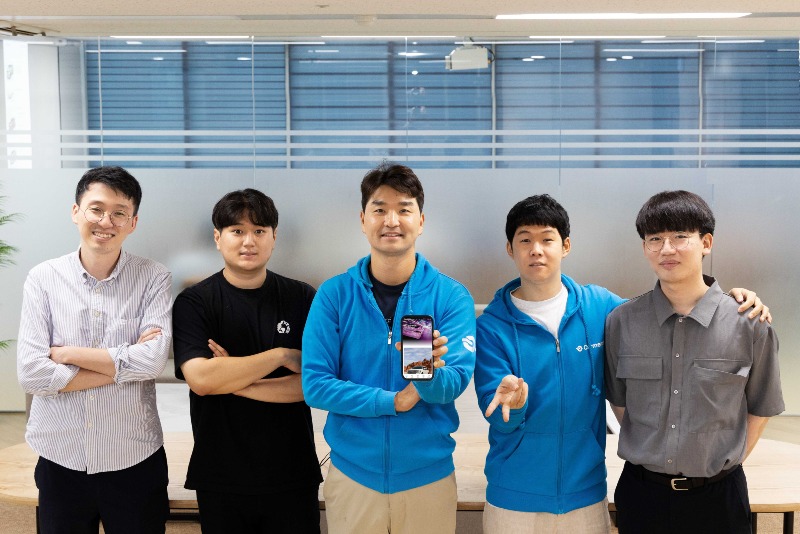
Lee Seung-won (hereafter Seung-won): Handle is a mobile car distribution company, and we launched the used-car e-commerce platform CARMERCE last November. In the used-car market, dealers hold significant power, and information imbalance among consumers is relatively high. CARMERCE was created to minimize risk factors—such as unclear pricing and false listings—and allow users to purchase used cars with the same convenience as online shopping.
Lee Joon-seop (hereafter Joon-seop): I am in charge of search engine development. Previously, I handled deployment, source management, and CI/CD, but as more services were developed, I also took responsibility for monitoring.
Q. How is Handle’s IT infrastructure structured?
Joon-seop: We use Google Cloud (GCP) and AWS, and NHN Cloud for loan brokerage services. The backend is developed with Java, Kotlin, and Node.js; the frontend uses React and React Native. The development environment is containerized with Docker in an MSA architecture, and services run on Kubernetes.
Q. What led you to adopt WhaTap?
Seung-won: Initially, only some AWS services were monitored with WhaTap. After launching CARMERCE, the need to monitor core services increased, so we expanded monitoring across both GCP and AWS.
Joon-seop: Previously, we used ELK for log monitoring and open-source tools for IDC environments. But these weren’t ideal for our cloud-native setup, so I discovered WhaTap while searching for alternatives.
Q. How many hours a day do you use monitoring?
Joon-seop: I open the monitoring dashboard as soon as I arrive at work. WhaTap alerts are also integrated into Slack. Another operations team lead checks the WhaTap dashboard for about 30–60 minutes every morning.
Q. What advantages does WhaTap offer compared to previous tools?
Seung-won: I previously used an on-premise monitoring solution at an affiliate company. To fully utilize that tool, we had to customize everything manually. Deploying a single server required scheduling with an engineer and performing separate configuration work, which was extremely time-consuming.
WhaTap, on the other hand, provided clear installation guides and documentation, making setup simple and fast. It saved us a tremendous amount of time.
Q. What are the most frequently used WhaTap screens or features?
Joon-seop: I frequently use application dashboards and heatmaps to check for error patterns. I also use the integrated reporting feature, which lets me quickly create reports across multiple projects—tracking error counts by date and identifying increases or decreases.
Seung-won: I also check heatmaps often. Heatmaps make it easy to see where a transaction originated, what type of request it was, how the DB query behaved, and how long it took end-to-end.
Q. Can you share an example of an issue resolved using WhaTap?
Seung-won: Recently, a foreign user failed identity verification during a vehicle purchase because a parameter wasn’t set correctly. While monitoring, I spotted the error in a heatmap and immediately notified the team—allowing us to fix the issue within 10 minutes. It didn’t recur.
Since our service is still in an early phase, occasional app crashes occur. Each time, WhaTap Monitoring helped us detect and resolve them quickly.
Joon-seop: Before using WhaTap, it was difficult to determine where an error occurred unless users reported it. After adopting WhaTap, we can clearly see which request triggered the error. Introducing monitoring was unquestionably the right decision.
Q. Why should startups use monitoring?
Joon-seop: With smaller teams, monitoring becomes even more essential. Monitoring allows issues to be detected faster, saving both time and money. For example, when the database becomes locked, you would normally need to manually query the DB, but WhaTap’s Locked-In feature speeds up resolution and prevents recurrence. Monitoring is an essential system, not a luxury.
Seung-won: WhaTap greatly reduced our development time—by 70–80%, based on our internal measurements.
Q. You’re using the WhaTap Startup Package. Would you recommend it?
Seung-won: We already knew WhaTap was strong in terms of functionality, but during the early service stage, budget concerns made adoption difficult. When we discovered the Startup Package promotion, the decision became easy. Without it, we would have needed lengthy internal discussions.
If a new service requires stable operation, monitoring is essential. I hope other startup teams reading this consider adopting monitoring early through the WhaTap Startup Package.

%201.svg)


%201.svg)