.svg)
Share
Copied!
%201.svg) Customer Story
Customer Story


As digital transformation accelerates, user experience has become a key element of enterprise competitiveness. In particular, in the e-commerce industry, stable service delivery and quick issue response are now critical requirements.
STCOMM, located in Yeongdeungpo-gu, Seoul, is a company specializing in building and operating e-commerce platforms. As a result, it is responsible for overall IT operations so that its clients can focus on sales. It operates web and app platforms for major commerce brands such as North Face, Vans, and Timberland. STCOMM is one of the companies that actively uses WhaTap to enable efficient IT operations for high-traffic e-commerce businesses.
Today, I met with General Manager Jeong Kwang-jo, who leads the infrastructure department at STCOMM, to hear more about how the operating environment has changed since adopting WhaTap and what results have actually been achieved. Let's take a closer look at real stories from the field showing how WhaTap contributes to practical IT operation improvements beyond simple monitoring.
I’m Jeong Kwang-jo, in charge of infrastructure and DevOps at STCOMM. It has been about five years since I joined the company, and I have been responsible for overall infrastructure operations during that time. When I first joined, there was no dedicated infrastructure team, and IT operations depended heavily on outsourcing. As we gradually began managing the system ourselves, the importance of monitoring naturally grew. In that process, WhaTap was introduced, and it has been a great help in enabling stable service operations ever since.

STCOMM is responsible for overall IT operations—from web and mobile platform management for e-commerce brands to delivery systems (WMS), membership management (PRM), and cloud infrastructure. We operate online platforms for major brands such as North Face, Vans, and Timberland, and have recently launched AI centers and new projects for large corporate affiliates. From a brand’s perspective, you can think of STCOMM as a technology-based operations partner that manages everything in an integrated manner so that brands can fully focus on sales growth.

That's right. More precisely, during the transition process when systems were being transferred from our previous management agency, WhaTap was naturally introduced along with it. The previous operators were already using WhaTap, and I had also used it during my time at Lotte Commerce, so I had a certain level of trust in the product. During the transition, if systems were left idle or not managed properly, WhaTap’s Customer Success Management (CSM) team even visited us in person for training and consulting. Thanks to that, we were able to make effective use of the platform from the beginning.
We currently use WhaTap APM, DPM, SMS, and URL monitoring.
Yes. At the time, we reviewed several alternatives. Some foreign platforms had many features, but we felt they were excessive for our requirements, and above all, their cost structure made them unsuitable.
WhaTap, on the other hand, offered an intuitive UI, compatibility with various third-party systems, and—most importantly—a dedicated CSM team that supported environment-specific setup. Thanks to this, we’ve been using WhaTap for five years without regret.
Before implementing WhaTap, our biggest challenge was the “structural limitation” where identifying the root cause of failures was delayed, resulting in longer response times. We lacked a system that could quickly detect and act on issues occurring in both applications and infrastructure. Naturally, the operational burden increased.
In particular, delays during high-traffic events posed risks directly linked to brand credibility. Technical debt accumulated, and the team had limited manpower.

Due to the nature of e-commerce platforms, we needed a system that could monitor concurrent users, transaction flow, and resource usage in real time, but we had no tools capable of doing so. Our infrastructure team manually browsed logs and restarted individual servers after failures. Looking back, the operational burden was extremely heavy for everyone.
After adopting WhaTap, we were able to improve operational efficiency significantly.
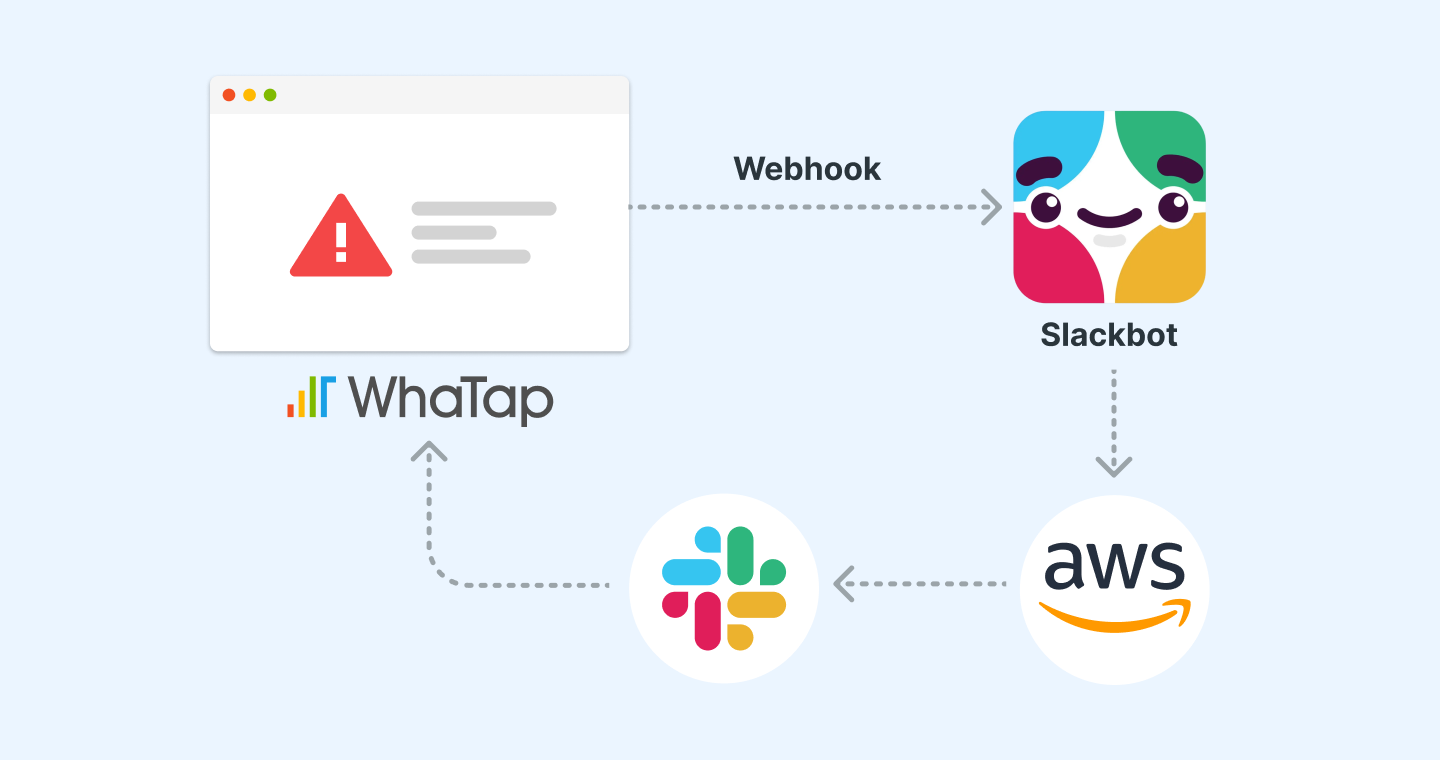
Previously, when issues like thread saturation occurred, we had to log in to servers and handle them manually. Now, the system restarts servers automatically when conditions are met, and results are displayed in Slack—reducing repetitive tasks and operational burden.
Beyond real-time alerts, we also use WhaTap to quantitatively improve both infrastructure and applications. For example:
This prevents unnecessary overprovisioning and reduces infrastructure costs.
Customers often request server status and traffic trends during event seasons. We frequently extract real-time CPU, memory, and concurrent user data directly from the WhaTap dashboard, and clients appreciate receiving data that clearly reflects real-time service conditions.
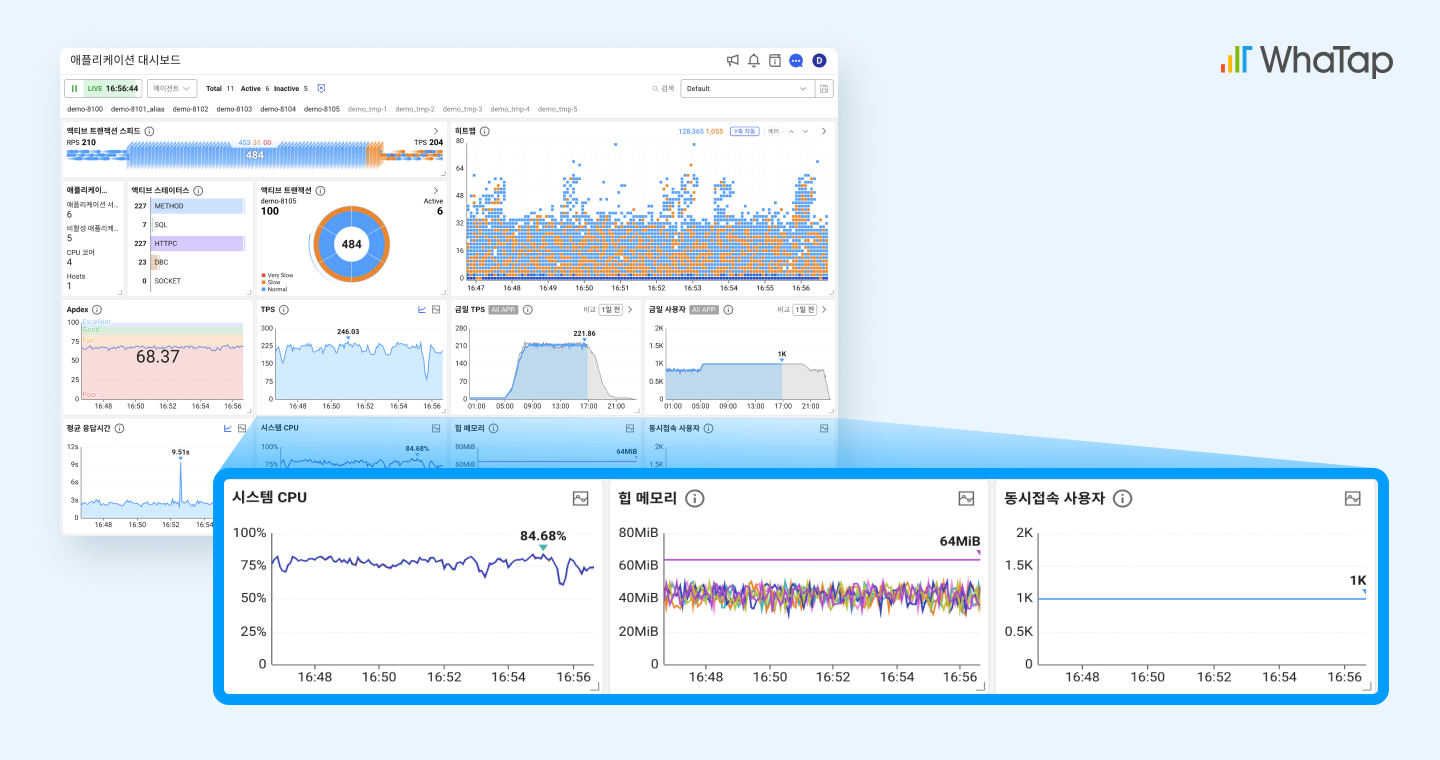
Even qualitatively, WhaTap helped increase data awareness among internal developers. Developers actively participate in WhaTap training, and recently we’ve been planning method-level monitoring for more granular insights.
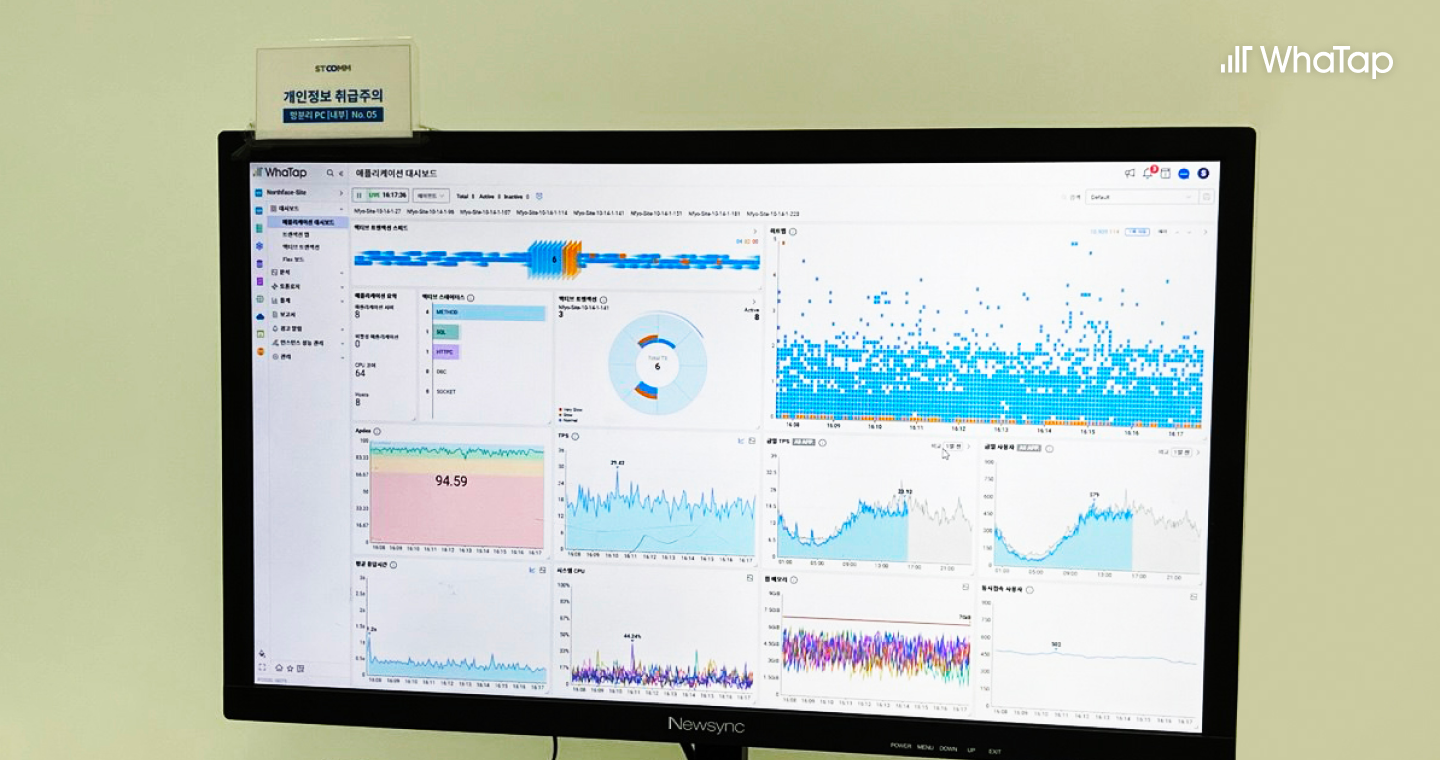
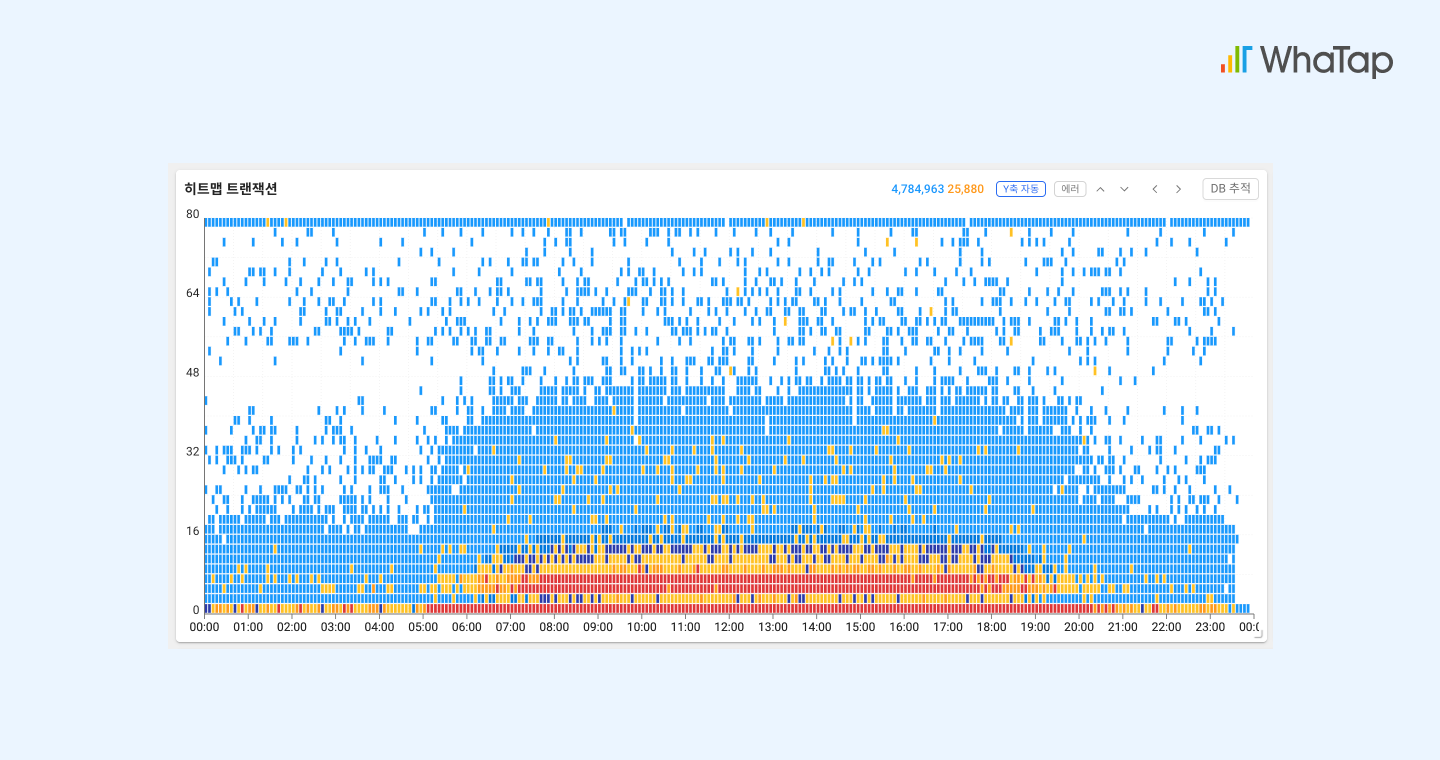
We frequently use WhaTap’s alert/notification, heatmaps, and transaction statistics. The heatmap is intuitive and helps immediately identify abnormal behavior. The transaction statistics allow us to pinpoint areas where errors occur frequently and make improvements accordingly.
During events, real-time metrics help determine scaling decisions. In the past, I even tested building an internal monitoring system using open-source tools, but the UI and visualization aspects didn’t match WhaTap’s usability. The intuitive heatmap remains one of my favorite features.
In the second half of 2025, STCOMM is preparing for a gradual transition from its existing AWS EC2-based infrastructure to a Kubernetes environment. First, the infrastructure will be converted to a container-based approach, and then the application will be gradually moved to an MSA architecture. WhaTap already provides monitoring optimized for Kubernetes environments, and we plan to expand its use by applying it from the PoC stage.
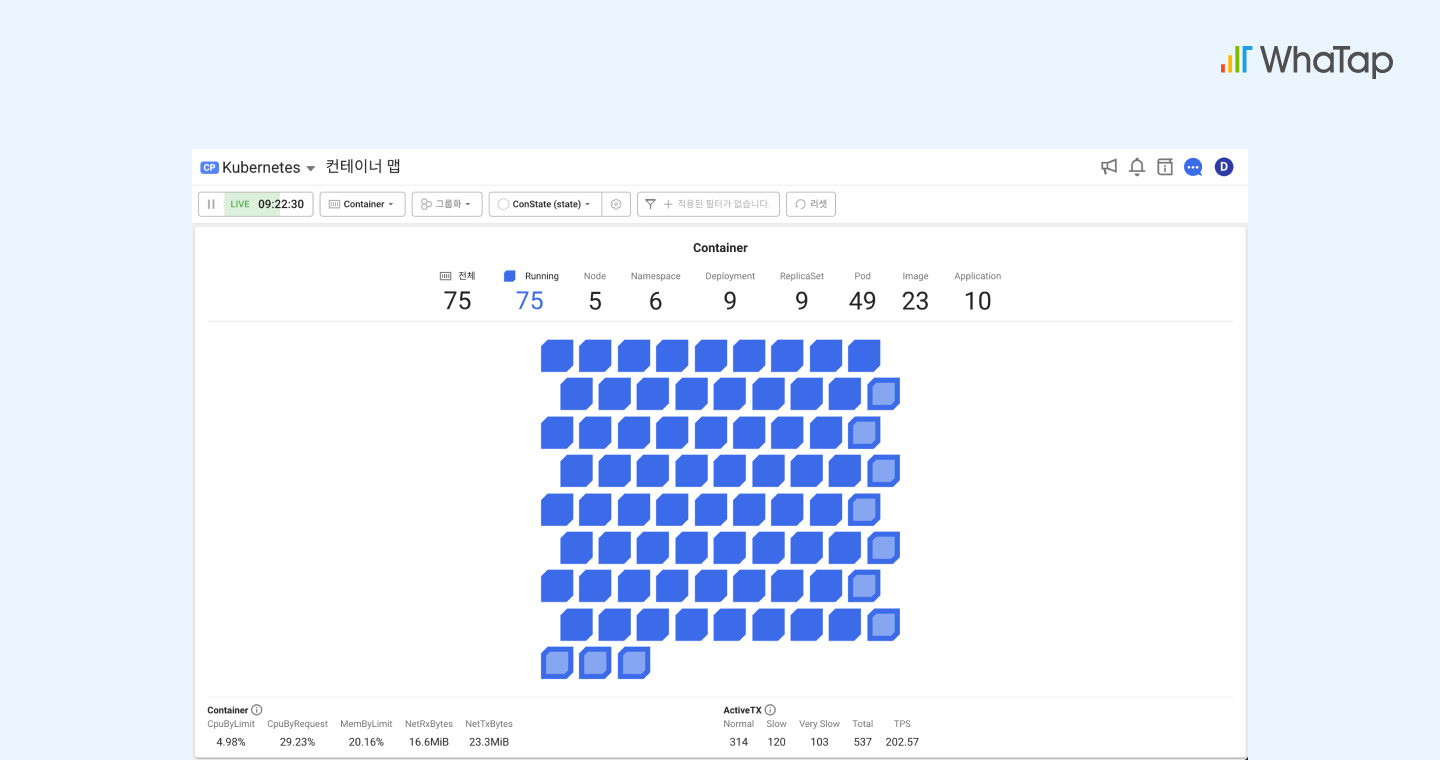
In addition, in response to customer requests such as URL call distribution, influx channels, and customer trends, we are also reviewing customized report automation for each brand. By utilizing WhaTap’s flexible dashboard configuration and API integration capabilities, we expect not only improved report quality but also much higher efficiency in report creation.
For companies struggling with operational inefficiency and technical debt, I believe WhaTap can be the starting point for systematic problem recognition and improvement. More than simple monitoring, we have experienced firsthand the full cycle of “real-time notification → automated response → data-based analysis → code improvement → operational efficiency.”

According to the interview with General Manager Jeong Kwang-jo, STCOMM is not just using WhaTap as a monitoring tool but as a core platform for improving operational efficiency and service quality. By systematizing the entire operation cycle—from real-time monitoring to automation, analysis, and improvement—STCOMM has created an environment where clients can focus more on their business.

In the rapidly changing e-commerce market, STCOMM is a prime example of transforming IT operations into competitiveness. We look forward to seeing STCOMM continue actively using WhaTap in the future.
What about a company like STCOMM that wants to resolve technical debt through actual IT operations improvement?

%201.svg)